

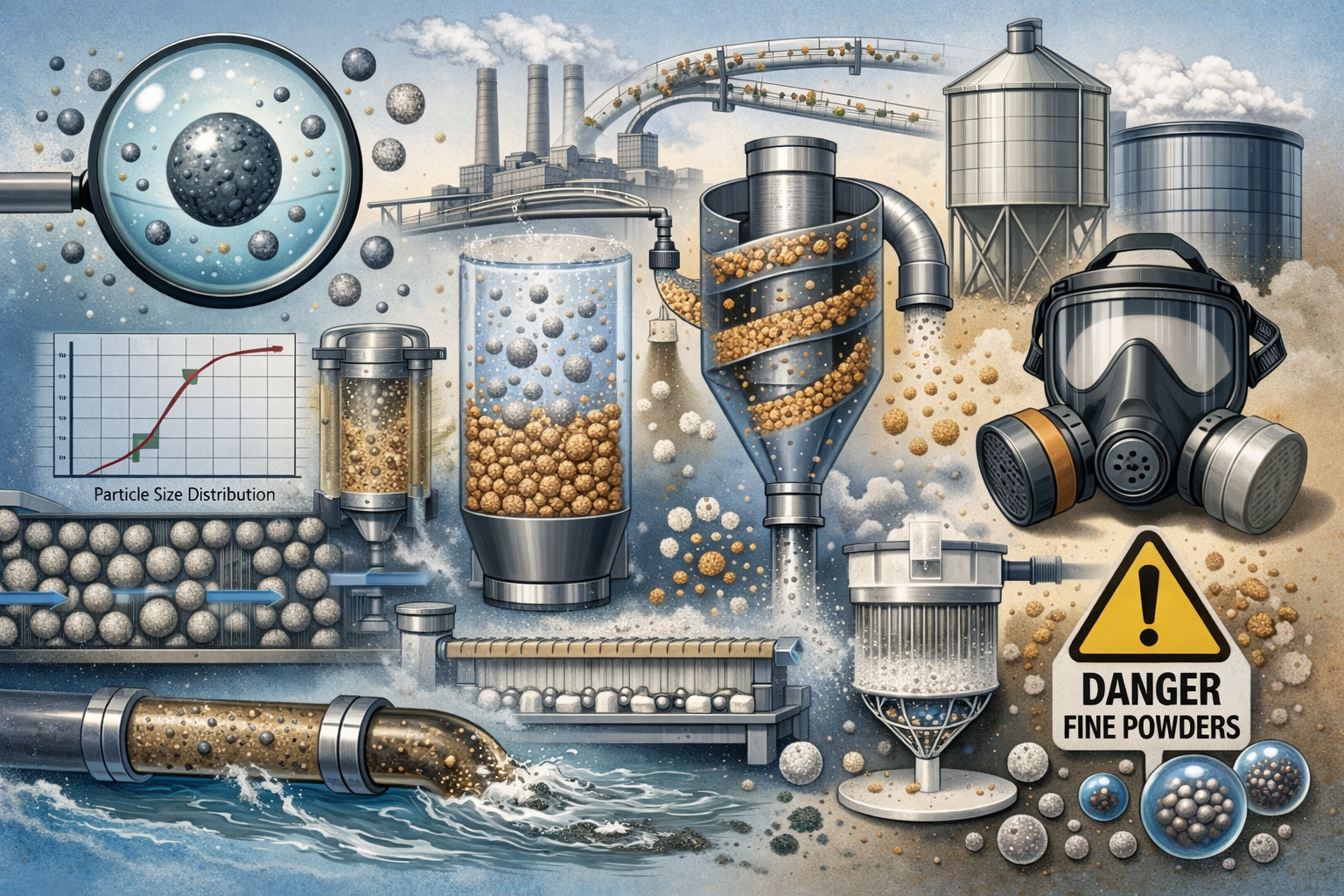
In many process industries, particulate materials, powders, and bulk solids play a crucial role. They are extensively utilized across a diverse range of sectors including food processing, pharmaceuticals, biotechnology, oil, chemicals, mineral processing, metallurgy, detergents, power generation, paints, plastics, and cosmetics. These fields require the expertise of professionals from various scientific and engineering disciplines. The teams often comprise chemical engineers, chemists, biologists, physicists, pharmacists, mineral engineers, food technologists, metallurgists, materials scientists and engineers, environmental scientists and engineers, mechanical engineers, combustion specialists, as well as civil engineers.
Various processing steps involve the manipulation of particles and powders. For instance, particle formation can occur through crystallization, precipitation, granulation, spray drying, tabletting, extrusion, or grinding. Likewise, transportation methods might include pneumatic or hydraulic conveyance, mechanical conveying, or screw feeding, while other processes encompass mixing, drying, and coating. Additionally, handling particulates necessitates dependable storage solutions and careful management of associated health and safety issues. Successfully designing and operating these diverse processes across multiple industries requires an in-depth understanding of powder and particle behavior—a behavior that often contradicts our everyday experience with liquids and gases.
Understanding the science behind particulate materials—often referred to as particle or powder technology—is crucial in the process industries. At the design stage, challenges associated with handling or processing powders are sometimes neglected, which frequently leads to production stoppages caused by powder-related issues. However, even a basic grasp of powder behavior can significantly reduce these problems, leading to fewer downtimes, enhanced quality control, and improved management of environmental emissions.
Various processing steps involve the manipulation of particles and powders. For instance, particle formation can occur through crystallization, precipitation, granulation, spray drying, tabletting, extrusion, or grinding. Likewise, transportation methods might include pneumatic or hydraulic conveyance, mechanical conveying, or screw feeding, while other processes encompass mixing, drying, and coating. Additionally, handling particulates necessitates dependable storage solutions and careful management of associated health and safety issues. Successfully designing and operating these diverse processes across multiple industries requires an in-depth understanding of powder and particle behavior—a behavior that often contradicts our everyday experience with liquids and gases.
Understanding the science behind particulate materials—often referred to as particle or powder technology—is crucial in the process industries. At the design stage, challenges associated with handling or processing powders are sometimes neglected, which frequently leads to production stoppages caused by powder-related issues. However, even a basic grasp of powder behavior can significantly reduce these problems, leading to fewer downtimes, enhanced quality control, and improved management of environmental emissions.
- Manager: Bronwen Roux
- Facilitator: Marno Basson
- Facilitator: Jamie Cripwell
- Facilitator: Christie Dorfling
- Facilitator: Tobi Louw
- Facilitator: Lingam Pillay